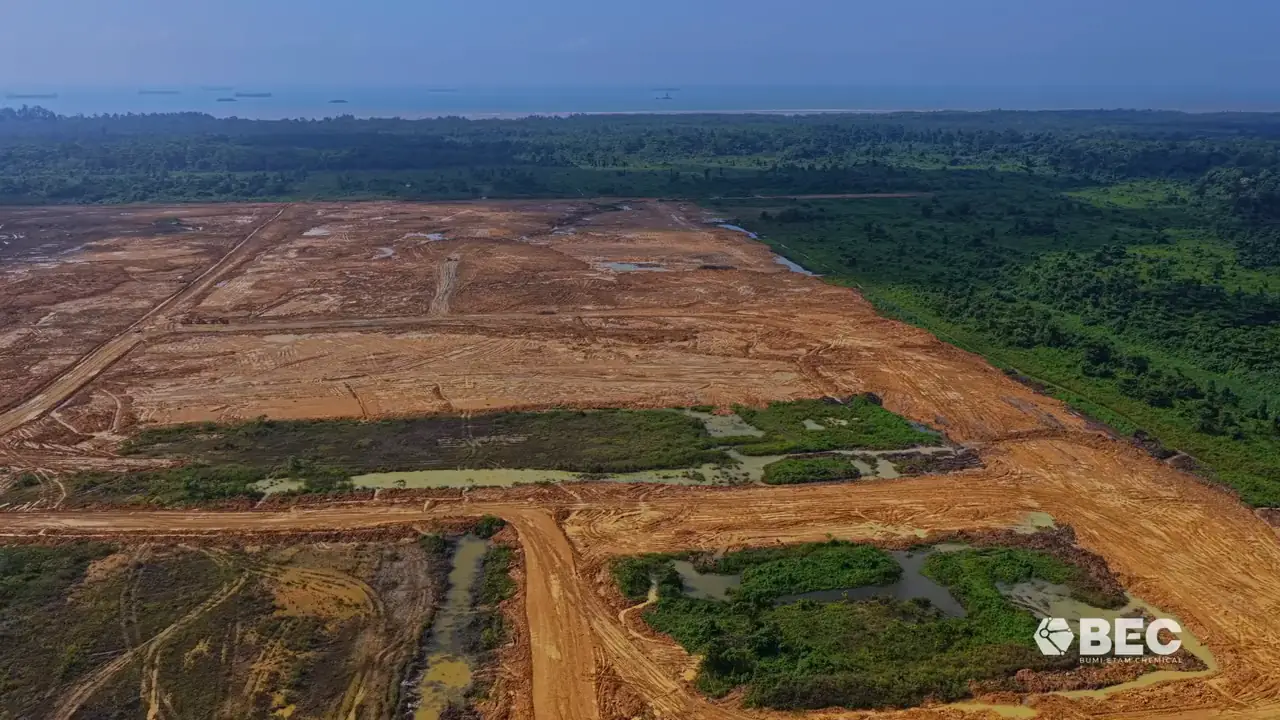
CTM Project
Unlocking the Value of Coal
Developing the potential of low-rank coal through gasification technology to produce methanol.
What is gasification
What is gasification?
Gasification converts carbon-containing materials such as coal, biomass, or oil residues into synthesis gas (syngas) by heating them with limited amounts of oxygen and steam. Syngas consists mainly of carbon monoxide (CO) and hydrogen (H₂).
Combustion
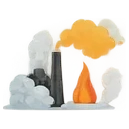 Excess oxygenHeat + CO₂
Combustion → Heat + CO₂
All the carbon burns and the energy leaves as heat and CO₂.
Gasification
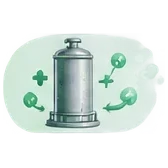 Limited oxygen + steamCO + H₂
Gasification → Syngas (CO + H₂)
The carbon is not fully burned; it is converted into gas molecules that become the feedstock for chemical products.
Combustion produces heat.Gasification produces feedstock.
Process flow
From Coal to Methanol
The journey starts with low-rank coal and ends as a high-value chemical product.
- 1
Coal Preparation
Crushing, drying, handling

Coal is crushed, dried, and prepared so that its size and moisture suit the gasifier.
- 2
Gasification
Coal + O₂ + H₂O → Syngas

Inside the gasifier, coal reacts with limited amounts of oxygen and steam and is converted into syngas.
- 3
Syngas Purification
Cleaning and conditioning the syngas
Impurities such as sulphur compounds and CO₂ are removed, and the CO to H₂ ratio is adjusted for synthesis.
- 4
Methanol Synthesis
Catalytic reaction produces methanol
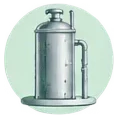
The cleaned syngas reacts over a catalyst, combining CO and H₂ into methanol.
- 5
Methanol
CH₃OH, the end product
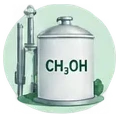
Methanol is refined to international specifications, then stored and made ready for distribution.
Hover over or tap each stage for a short explanation.
Technology & readiness
Technology and Operation Readiness
Commercially proven process technology, backed by integrated utility and feedstock support.

Technology
The Coal-to-Methanol process is commercially proven.

Licensor
The selected technology licensor is experienced and proven in commercial operation.

Infrastructure
The project scope covers the utilities and supporting infrastructure needed to ensure reliable and efficient operation.

Feedstock
Low-rank coal supplied from East Kutai.
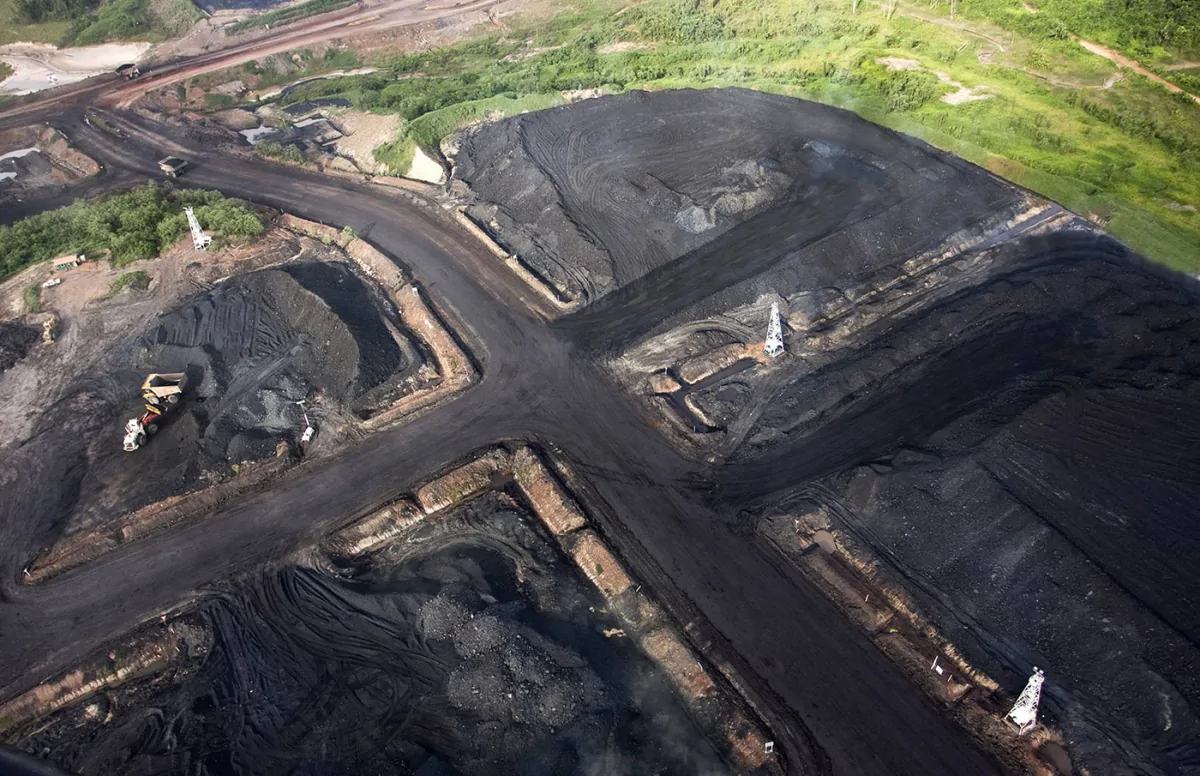
 Lower calorific value
 Higher moisture content
 Uneconomical to transport over long distances
Why this feedstock
Why low-rank coal?
Not all coal has to be burned to create value.
Low-rank coal has a lower calorific value and a higher moisture content, so its value as a fuel is relatively low and shipping it over long distances is uneconomical. On the other hand, this type of coal is generally more reactive, which makes it well suited to gasification.
Processing it close to the mine into higher-value chemical products puts an under-used resource to work and is part of Indonesia's downstreaming agenda.
- Low-rank coal
- Processed near the source
- Gasification
- High-value product
 Processing coal close to its source turns a logistics challenge into a downstreaming opportunity.
Location
Why is the project located here?
The site was chosen to bring feedstock, infrastructure, and markets together in one integrated industrial estate.
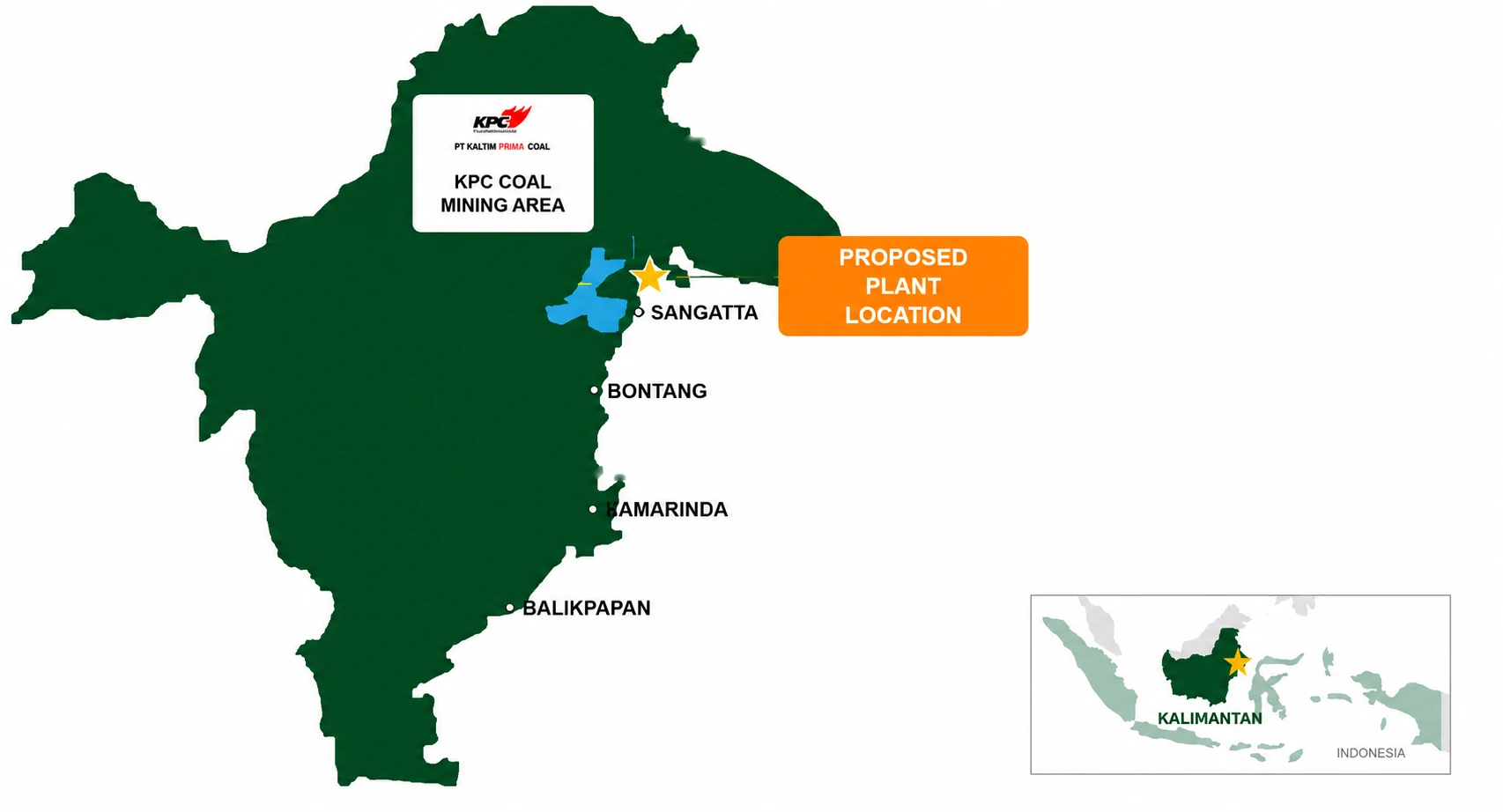
Close to feedstock
Located in East Kutai Regency, which holds abundant low-rank coal reserves.

Connected to infrastructure
Direct access to the Makassar Strait, roads, ports, and logistics networks for distribution and export.

Part of an industrial estate
Set within an industrial estate ecosystem that supports processing and downstream industries.
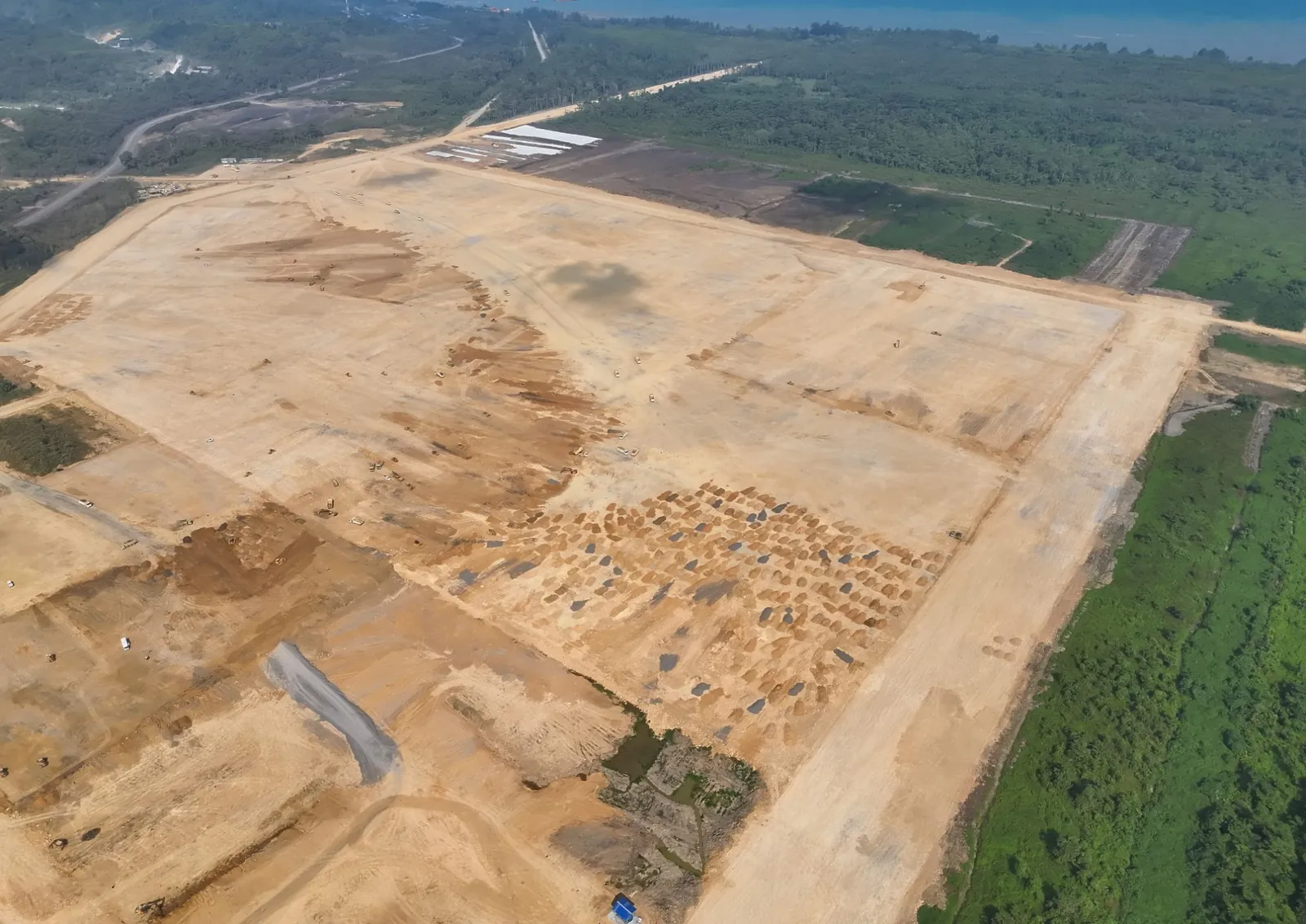
Industrial estate
Part of an integrated industrial ecosystem
PT Batuta Chemical Industrial Park (BCIP) in East Kutai, on the Makassar Strait, is being developed as an integrated industrial estate focused on coal processing. It is designed with an integrated infrastructure network, public facilities, port access, and more than 10% of its land set aside as green space. An application for Special Economic Zone (SEZ) status is in progress.
 IntegratedIndustrial estate
 >10%Green space
- Makassar StraitPort access
Roadmap
From preparation to production.
From FEED in 2026 to Commissioning in 2029
Three principal project phases.
FEED, Financing, Permitting, and Completion of Land Preparation
Front-end engineering design (FEED) sharpens the cost estimate, alongside finalising the financing structure and completing permitting and land preparation.
Product
Methanol CH₃OH
The main product, made through a sequence of gasification and synthesis processes.
FAQ
More information about the CTM project
A coal-fired power plant burns coal to produce heat, which is then used to generate electricity. In gasification, the coal is not burned completely; it is converted into synthesis gas (syngas), which can then be processed into methanol.
Coal gasification technology is already in commercial use and continues to develop. Operational safety is determined by the engineering design, safety standards, and operating management applied from the design stage through to plant operation.
By-products may include sulphuric acid as well as slag or ash that can be put to further use, depending on the configuration and process technology used.